Why 3D Visualization Leads to Better Engineering Outcomes
Projects in modern engineering often revolve around complex datasets gathered on complicated sites. These datasets must be communicated clearly to ensure safety, cost-savings, and success with everything from geotechnical design to infrastructure development. However, when that information is confined to 2D maps, key spatial details—like depth, volume, and structure—get lost. The final result? A limited understanding that makes it difficult for stakeholders to achieve positive outcomes. That’s where 3D visualization changes everything.
The Real-World Benefits of Seeing Engineering Data in 3D
Unlike 2D maps, which flatten depth and oversimplify or overcomplicate surface and subsurface relationships, 3D visualization equips you to deliver realistic spatial context. The models show geometry, scale, and interaction as they exist in the real world, clearly revealing insights that would otherwise be confusing on a 2D map. This clarity produces better results for stakeholders, but to bring that point home, here are just a few key ways 3D enhances engineering outcomes.
Improving Design Accuracy and Reducing Assumptions
3D models equip stakeholders to validate designs early by seeing geometry, volume, and relationships in context long before construction begins. This clear spatial understanding reduces guesswork, helping teams spot inconsistencies, conflicts, or risks that might not be easy to spot with 2D visuals. The result is more accurate designs, fewer costly revisions, and safer, more reliable outcomes once work begins in the field.
Enhancing Analysis and Data Integration
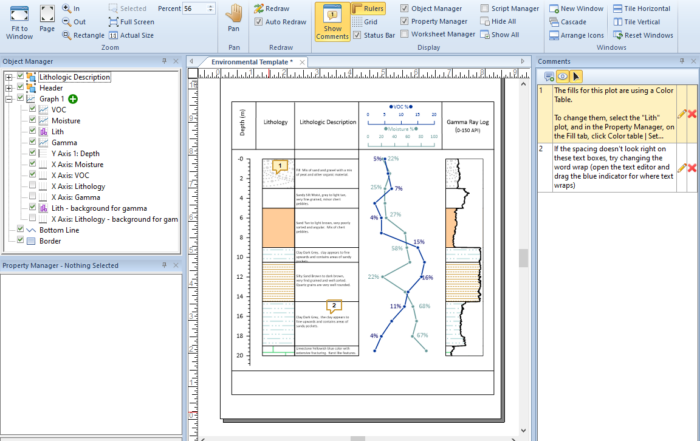
Engineering projects often rely on different datasets, from geotechnical logs and CAD files to LiDAR and hydrologic data. With 2D, visualizing all of these datasets can either feel fragmented if you create multiple simple maps to communicate the information, or convoluted if you try to put all the information onto one map. With 3D, you avoid those challenges. The different datasets can come together in one cohesive model, empowering stakeholders to clearly see how layers, systems, and features interact so they can gain deeper insight and make more confident decisions.
Supporting Better Communication Across Teams and Stakeholders
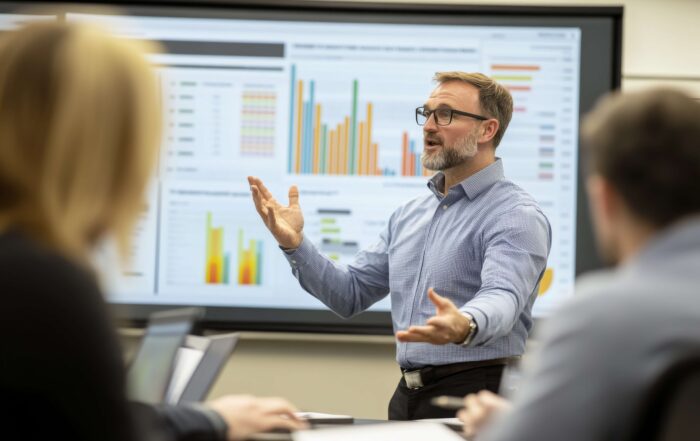
Explaining technical details to non-technical stakeholders can be challenging, but 3D visualization bridges the gap in understanding. It transforms complex data into intuitive visuals that make design intent, constraints, and outcomes easier to grasp. Whether sharing progress with clients or collaborating with cross-disciplinary teams, 3D helps everyone stay aligned regardless of their technical background and expertise.
Streamlining Iteration and Scenario Evaluation
In 2D, testing design alternatives or updating project assumptions can be slow and disjointed. You often have to recreate multiple views or manually adjust overlapping data layers, which makes it difficult to see how one change affects the rest of the project. In contrast, 3D visualization makes iteration seamless. You can quickly adjust parameters, test “what-if” scenarios, and instantly show stakeholders how updates ripple across the model. This ability to quickly visualize change leads to faster decision-making, more adaptive planning, and greater project agility overall.
A New Dimension of Understanding in Engineering
3D visualization provides the clarity needed to produce positive outcomes in engineering. Instead of flattening depth onto a map, 3D turns complex data into realistic, spatially accurate models that show how surface and subsurface features interact in the real world. That realism is not only visually impressive but also great at ensuring stakeholders get the results they seek, including smarter designs, earlier problem-solving, better communication, and streamlined iterations.
Want to experience the power of creating 3D models for your engineering projects? Download a 14-day free trial of Surfer now!