Guide to Using Statistical Process Control Charts for Quality Control
Data-driven individuals and businesses are continuously seeking tools that can provide insights, drive improvements, and maintain consistency. Statistical Process Control (SPC) charts are more than just graphs—they’re a powerful asset for meeting high-quality standards. Widely used across various industries, SPC charts are instrumental in monitoring, controlling, and enhancing processes.
What is a Statistical Process Control Chart?
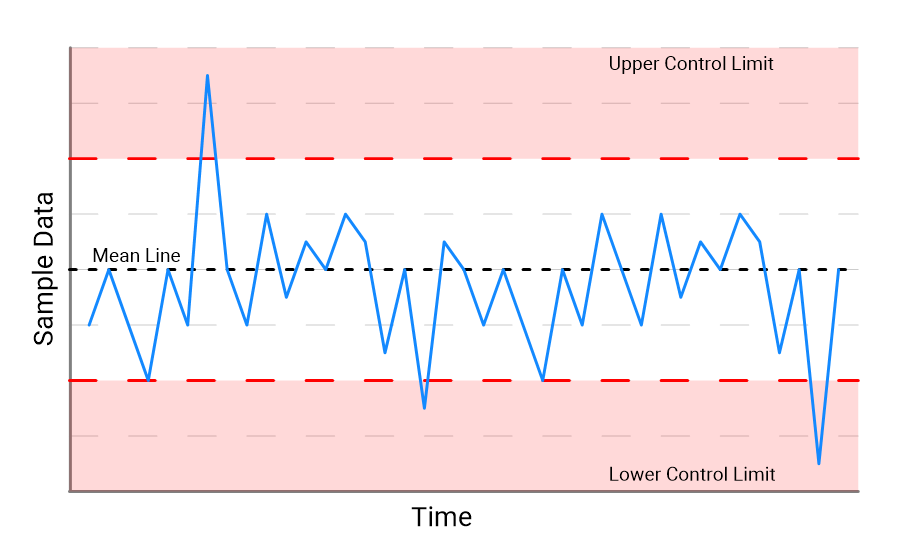
A Statistical Process Control Chart (SPC chart) is a graph used to study how a process changes over time. By plotting data in time order and including central lines for averages and control limits, SPC charts help distinguish between natural process “noise” and significant “signals” that require action.
The Power of SPC Charts
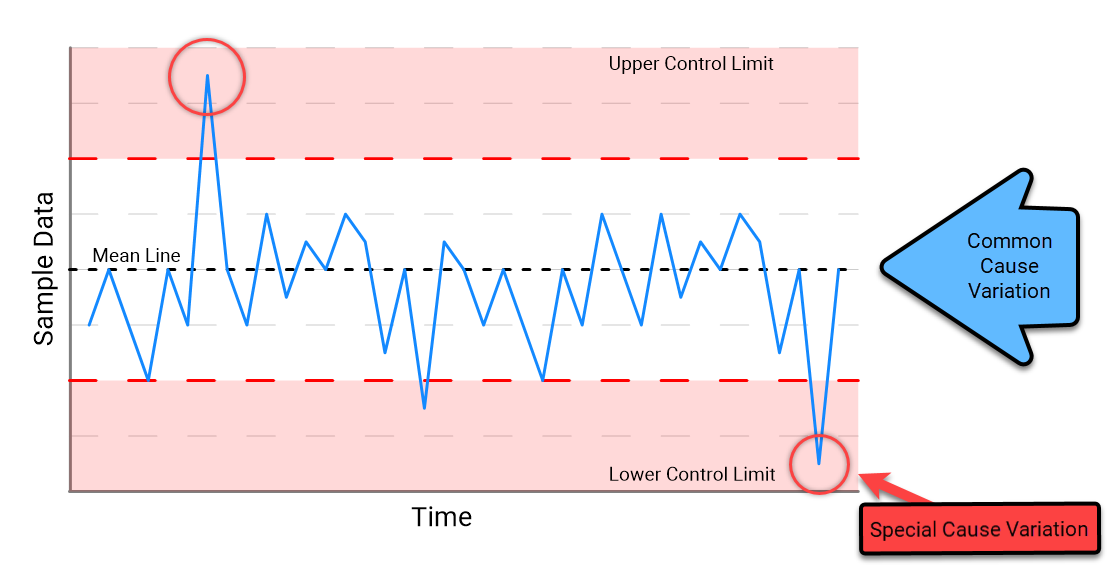
One of the most significant advantages of SPC charts is their ability to detect major variations in data early on. SPC charts can identify deviations from the norm before they escalate into major issues. This early detection allows users to address problems promptly, reducing the risk of delivering subpar results. SPC charts specifically help distinguish between common cause variations and special cause variations.
Common Cause Variations vs Special Cause Variations
Common cause variations fall within the control limits while special cause variations fall outside the control limits. This distinction is crucial as it informs the type of corrective action required. For common cause variations, improving the process may be necessary, while for special cause variations, identifying and eliminating external factors can be key.
A practical Example
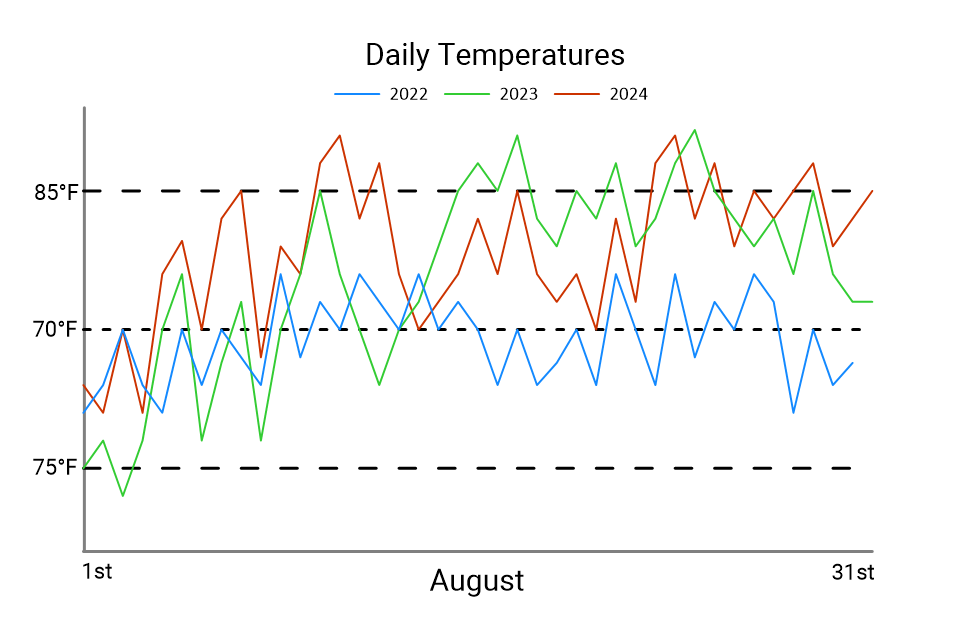
The SPC chart below provides a visual representation of temperatures over time, calling attention to the increase of special cause variations in 2023 and 2024. This helps identify patterns, trends, and potential areas for improvement or change. It also facilitates better decision-making by providing a clear picture of the current state and its performance history.
How to Interpret SPC Charts
To use SPC charts effectively, it’s important to understand the “anatomy” of the graph. A common point of confusion is the difference between control limits—which tell you what your process is actually doing—and specification limits, which tell you what you want it to do. To bring more clarity to this topic, below is a table outlining the main differences between control limits and specification limits.
| Feature | Control Limits (UCL/LCL) | Specification Limits (USL/LSL) |
|---|---|---|
| Derived From | The process data itself (statistical) | Customer requirements (contractual) |
| Purpose | To show if the process is stable | To show if the product is acceptable |
| Adjusted By | Changes in process performance | Changes in design or client needs |
Once you understand these boundaries, you can begin to look for specific patterns that signal a problem. Statistical experts use a set of guidelines called the Western Electric Rules to spot instability before it leads to failure.
Recognizing Patterns: Western Electric Rules
To make the best use of your data, look for these three standard “signals” that indicate a process may be out of control:
- Point Outside Limits: A single data point falls outside the Upper Control Limit (UCL) or Lower Control Limit (LCL). This is the most immediate sign of a special cause variation.
- The Run: Seven or more consecutive points fall on one side of the mean line. Even if they are within the limits, this “shift” suggests the process average has changed.
- The Trend: Seven or more consecutive points are steadily increasing or decreasing. This indicates a gradual drift, often caused by tool wear or decaying materials.
Data-Driven Decision Making
Incorporating SPC charts into quality control practices promotes a data-driven approach to decision-making. By highlighting the data that exceeds the upper and/or lower control limits, you are able to efficiently identify variation that requires immediate attention. This can lead to more accurate assessments of process performance and more effective interventions.
SPC charts are not just for monitoring—they are also powerful tools for driving continuous improvement. By regularly analyzing SPC charts, you can identify opportunities for process enhancements by analyzing trends within common cause variation. This ongoing improvement cycle helps maintain competitiveness and adapt to changing market demands.
Immediate Action Made Clear
SPC charts are invaluable for any organization committed to quality and efficiency. Their ability to detect problems early, differentiate between types of variations, enhance process understanding, and drive continuous improvement makes them a cornerstone of effective quality control. By integrating SPC charts into your operations, you can achieve higher consistency and deliver superior results, ultimately gaining a competitive edge.
Embrace the power of SPC charts using Golden Software’s Grapher! Learn how to take your quality control to the next level with our SPC charts how-to article.
Recent Articles
- Sep 9, 2026|Gabbie Rhodes|4 min
Explore how Submara Survey bridged the gap between terrestrial elevation data and underwater bathymetry to guide costal development in Norway.
- Sep 9, 2026|Gabbie Rhodes|10 min
In a recent webinar, John Vanderlaan, founder and owner of Prism GeoImaging, Inc., explored how to visualize geophysical data effectively.
- Sep 2, 2026|Gabbie Rhodes|8 min
Effective wildfire mitigation requires more than tracking fire behavior alone. You have to monitor multiple variables, and visualizations can help.
- Sep 2, 2026|Gabbie Rhodes|6 min
Promising mineral deposits are rarely identified by a single variable. That's why multivariate data visualization is essential to mineral exploration.