Workplace Productivity Hacks During High-Volume Months
For many geoscientists and engineers, the busiest time of year is from May through September. Fieldwork ramps up. Data flows in. Deadlines pile up. And what begins as a manageable workload quickly turns into multiple overlapping projects that are all marked “urgent.”
During this peak season, it’s hard to complete everything with excellence on time, especially when each project feels like a priority. That’s why we’re walking through practical workplace productivity hacks designed specifically for high-volume months. By implementing a few intentional strategies, you can streamline your workflow to deliver great outputs and hit deadlines—all without burning out before the season ends.
Why May–September Creates Workflow Bottlenecks
Before we dive into specific productivity hacks, let’s answer an important question: why is May through September busier than other times of the year?
For geoscientists and engineers, the surge is driven by narrow field windows, academic schedules, and environmental conditions that compress months of work into a short stretch of time. When those forces align, data collection accelerates, and so do analysis, visualization, reporting, and stakeholder demands. Here’s how that seasonal compression plays out across different specialties.
1. Academic & Research Cycles
In academic and research environments, June through August is often the most active time of year. Summer breaks free up professors and students for intensive data collection and field camps, providing an opportune window to schedule research projects. The result? A concentrated surge of fieldwork followed by an equally concentrated push to process, analyze, visualize, and publish findings before the semester resumes.
2. Mapping & Exploration Windows
For mapping and exploration teams—especially in mountainous or high-latitude regions like Alaska, Canada, or the Alps—the window is even tighter. Fieldwork often can’t begin until snow melts in late June, and it must wrap up before the first major freeze in September. What could ideally be paced throughout multiple months becomes a weather-dependent sprint. Data collection peaks quickly, leaving little margin for delay.
3. Natural Hazard Monitoring
For landslide and flood specialists, the high-volume months often occur during the “shoulder” seasons of the year, which are spring and fall. Heavy rains and snowmelt activate unstable slopes and waterways, requiring rapid monitoring, sampling, and reporting. Because conditions are dynamic, response timelines are short.
Compounding these predictable patterns are unpredictable events. While snowmelt happens in the spring, Monsoon season in the Southwest (June–September) and Hurricane season in the Atlantic (June–November) significantly impacts these specialists. Extreme weather events during these months add an unpredictable surge on top of the high-volume predictable seasonal work.
The Common Pattern: Compression
Regardless of specialty, the surge in work creates two consistent pressures:
- Field data multiplies: There’s more sampling, measurements, and site visits, leading to a sharp increase in data that must be processed and visualized.
- Timelines overlap: Deliverables stack, revisions collide, and multiple stakeholders expect fast turnaround simultaneously.
Ultimately, the issue is both volume and compression. When data collection, analysis, visualization, and reporting all peak at once, even strong workflows begin to strain. Without intentional systems in place, that strain turns into rework, bottlenecks, and burnout.
Workplace Productivity Hacks for Peak Season
Now that we’ve unpacked why May through September creates workflow bottlenecks, the next step is learning how to navigate them intentionally.
Peak season requires smart execution. When deadlines stack and data keeps flowing in, you must streamline repetitive tasks and prioritize what truly matters to produce high-quality outputs on time. Here are some workplace productivity hacks that make achieving that goal much easier.
1. Prioritize What Moves Projects Forward
During high-volume months, one of the fastest ways to lose momentum is treating every task as equally urgent. Not all work carries the same weight, especially when timelines overlap.
Instead of reacting to whatever appears first in your inbox, identify the tasks that meaningfully advance your projects. In most cases, high-impact work falls into categories like these:
- Deliverables tied directly to contractual deadlines or regulatory milestones
- Tasks that unblock teammates, field crews, or stakeholders waiting on your final output
- Analytical decisions that allow the next phase of work to begin
A simple but powerful filter to apply each morning is this: what needs to happen today to keep this project moving forward? That question shifts your focus from busyness to progress.
2. Batch Repetitive Tasks
High-volume months often bring waves of similar work: updating maps with new field data, creating graphs, formatting recurring reports, and exporting visuals. If you handle each of these tasks as they appear, your day becomes fragmented. Context switching increases, and efficiency drops.
Instead, group similar tasks into focused blocks. For instance, you might do the following:
- Update all active project maps with the latest field measurements in one session
- Run gridding workflows across multiple datasets consecutively
- Standardize and format several draft reports during a dedicated timeframe
Let’s bring this to life with an example. If you update a single map, switch to answering emails, then return to a different map later, your brain has to reload context each time. But if you complete five map updates back-to-back, you stay in the same analytical mode and your speed improves naturally. Batching repetitive tasks reduces cognitive friction and improves both consistency and output quality.
3. Use Templates to Speed Up Output Creation
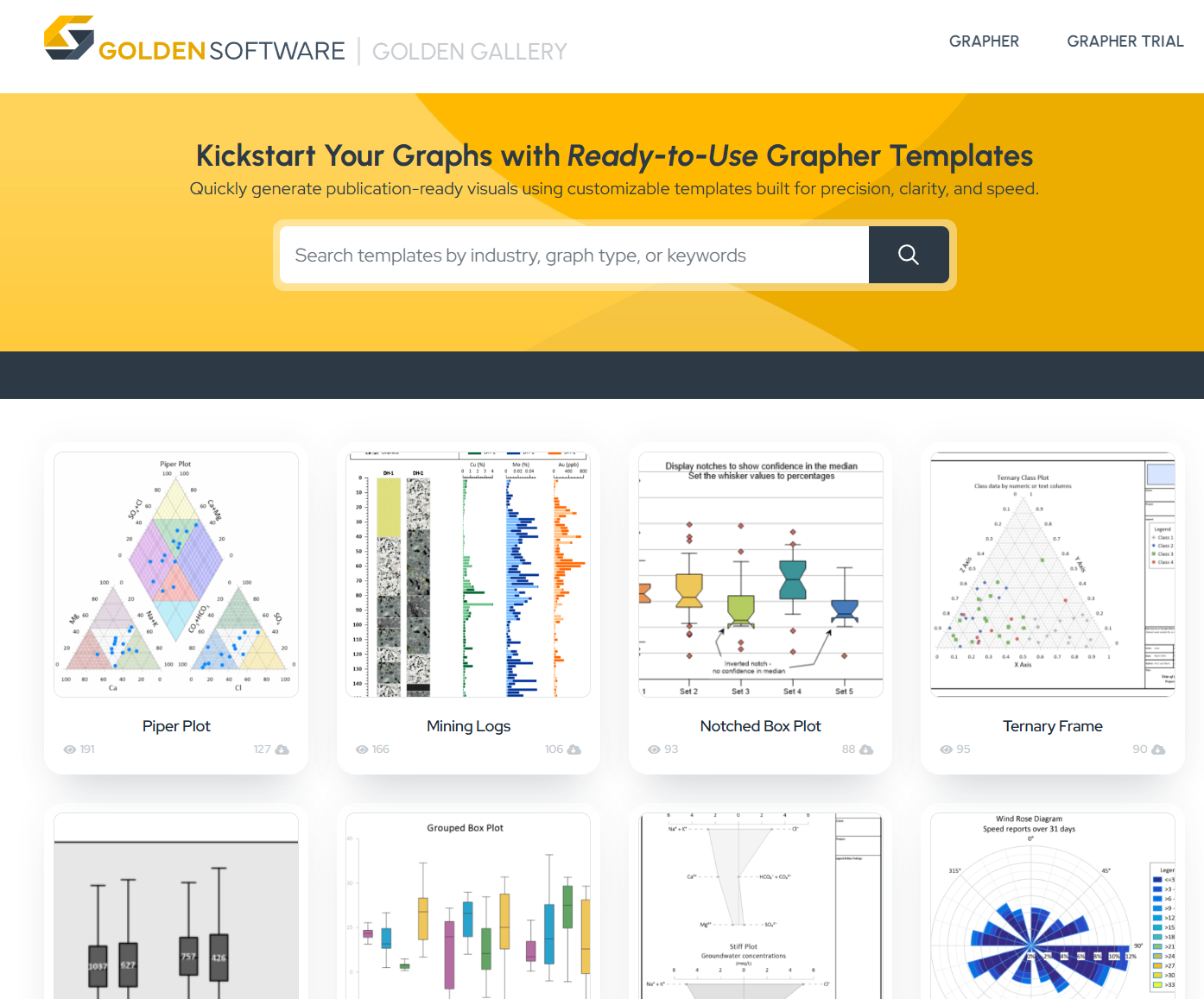
Starting from scratch during peak season is rarely the most strategic choice. If you regularly produce similar maps, graphs, or reports, use customizable templates as your foundation. Templates empower you to achieve these objectives:
- Jumpstart your workflow quickly by simply importing your data
- Maintain consistent legends, objects, and formatting across projects
- Minimize the risk of forgetting key map elements or report components
- Reduce the time it takes to recreate a similar plot or update it with data
Here’s a situation that highlights the benefit of templates more effectively: imagine receiving updated groundwater monitoring data every two weeks. Instead of redesigning a plot each time, you can open a saved template, swap in the dataset, and make customizations if necessary. That shift alone can save hours across the season.
Another benefit to highlight? Templates protect team consistency. When multiple contributors are working under tight deadlines, standardized starting points reduce revision cycles and prevent unnecessary formatting corrections.
4. Automate Repeat Workflows
When recurring datasets and repeat deliverables become the norm, automation shifts from helpful to essential. You can use scripts or built-in automation tools to accomplish various tasks, including the following:
- Comparing how different gridding methods represent your data
- Changing the font across all your objects in a plot
- Printing every open document in a single batch
- Automatically grid each Z column when your dataset has identical XY values
For instance, if you receive weekly field data, a script can check units, standardize column names, and generate preliminary visualizations in minutes. That empowers you to focus on interpreting trends rather than manually preparing files. Still, it’s important to remember that automation works best for structured, repeatable processes. High-value work like exploratory analysis and interpretation still require professional judgment.
5. Set Clear Expectations Early
Many peak-season bottlenecks come from challenges in communication.
Early in a project, clarify timelines, deliverable scope, and constraints with clients and internal teams. To reduce downstream pressure, communicate details such as:
- When drafts will be delivered and what they will include
- What level of analysis is realistic within the given timeframe
- Which revisions are included, and what would require additional time
Clear expectations reduce last-minute urgency and avoid unnecessary rework. When stakeholders understand boundaries from the beginning, they’re less likely to introduce disruptive changes late in the process.
6. Protect Focus Time
High-volume months often fill calendars with coordination calls and status updates. While collaboration is critical, uninterrupted thinking time is equally essential.
Schedule dedicated focus blocks and treat them as non-negotiable work sessions. During those blocks, here are some steps you can take to make it as productive as possible:
- Silence non-essential notifications
- Close unrelated tabs and applications
- Work exclusively on tasks that require sustained concentration
Deep analytical work cannot thrive in constant interruption. Protecting focus time ensures quality does not erode under deadline pressure.
7. Watch for Burnout Signals
Sustained intensity over several months can quietly diminish performance before you notice it. When you’re in a busy season, pay attention to signs of burnout, including the following:
- Persistent fatigue or reduced concentration
- Increased minor errors in analysis or formatting
- Difficulty making routine decisions
If you notice these signals, build in short breaks and adjust pacing where possible. Sustainable productivity consistently outperforms short bursts of overwork followed by exhaustion.
How These Productivity Hacks Strengthen Peak Season Workflows
When intentionally approaching high-volume months with workplace productivity hacks, something shifts. Instead of constantly catching up, your workflow becomes more predictable, leading to multiple benefits. In fact, here’s how these best practices translate into visible improvements during your busiest season.
Elimination of Workflow Friction
When your workflow is standardized, you stop spending mental energy on the “how”—including formatting and repetitive setups—and save it for the “what,” which centers on analysis and interpretation. This creates a sustainable pace that keeps project momentum high without requiring constant overtime.
Structural Reliability
High-volume months are when small errors like inconsistent scales or missing legends tend to creep in. A structured system acts as a set of guardrails, ensuring that even under the tightest deadlines, your final outputs remain professional, consistent, and scientifically defensible.
Cognitive Clarity and Reduced Stress
By setting expectations early and protecting focus times, you reduce the noise of constant interruptions. This clarity not only improves the quality of your visuals and reports but also protects your productivity, empowering you to reach the end of the season without worrying how to catch up.
Preserving Your Professional Signature
In high-stakes industries, your deliverables are your reputation. When you’re forced to rush through high-volume months without intentional systems, the polish of your work is often the first thing to suffer. A streamlined workflow ensures that even at your busiest, your final outputs maintain the level of excellence that defines your professionalism. That consistency signals to clients, regulators, and stakeholders that your analysis is as disciplined as your presentation.
Thriving, Not Just Surviving, Peak Season
May through September will likely always be intense. What can change is how you respond to it.
When you intentionally apply workflow productivity hacks, high-volume months will become more manageable. They’ll be seasons of strong execution where quality stays high, turnaround times stay reasonable, and burnout doesn’t define the experience.
But we’d love to hear from you on this matter: What’s one productivity strategy that helps you stay focused during your busiest months?
Drop your best tip in the comments below; your approach might be exactly what another geoscientist or engineer needs to thrive in peak season.
Recent Articles
- Jun 10, 2026|Gabbie Rhodes|9 min
During peak season, it’s hard to complete high-quality work on time. Fortunately, some practical workplace productivity hacks can help.
- Jun 10, 2026|Gabbie Rhodes|5 min
When it comes to software, the right licensing model matters. A one-time fee and subscription are common options. Which is right for you?
- Jun 3, 2026|Gabbie Rhodes|9 min
What's the difference between these two 3D data visualizations: 3D View and 3D surface maps? Discover their top differentiators.
- Jun 3, 2026|Gabbie Rhodes|8 min
Hiring a skilled geoscientist or engineer is the first step to strengthening your team. The next is training new employees for success.