
Historical Women in Geosciences: Lessons Modern Scientists Can Learn From These Pioneers

The story of geoscience is often told through landmark discoveries, breakthrough maps, and transformative fieldwork. But behind many of those milestones stand historical women in geosciences whose contributions helped shape geology, cartography, seismology, hydrology, and environmental science as we know them today.
These pioneering women mapped coastlines, classified fossils, advanced earthquake science, analyzed groundwater systems, and laid the groundwork for modern environmental research. Yet many of their achievements were overlooked. Their findings were sometimes questioned or understated, even as their work fundamentally advanced their disciplines.
Revisiting the lives and legacies of these historical women in geosciences provides an opportunity to not only recognize their hard work but also discover lessons we can learn from those who demonstrated excellence in their field.
Trailblazers and the Lessons They Leave Us
The history of Earth science is a story of persistence, rigor, and intellectual courage. Many historical women in geosciences made significant advancements that shape how we approach environmental science today. Below are just some of the pioneers whose work still echoes through today’s geoscience disciplines—and the lessons their careers offer modern scientists.
Florence Bascom: Scientific Rigor When Resources Are Limited
Quick Facts
- Important Dates: Born July 14, 1862 and passed on June 18, 1945
- Specialization: Petrography and Structural Geology
- Professional Milestone: First woman appointed as an Assistant Geologist at the USGS
- Academic Milestone: First woman to earn a PhD from Johns Hopkins University.
- Legacy: Founder of the Bryn Mawr College Geology Department
Her Contribution
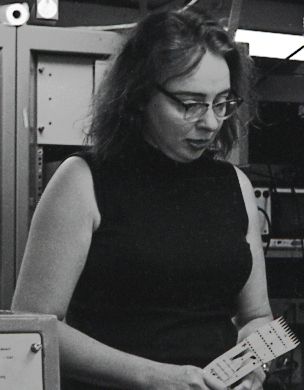
Florence Bascom was the first woman hired at the United States Geological Survey (USGS) in 1896 and one of the earliest American geologists to specialize in petrography, the microscopic study of rocks. She was also the first woman to earn a PhD from Johns Hopkins University, an achievement she reached despite being made to sit behind a screen during lectures to not “distract” her male peers.
At a time when laboratory tools were limited and women were often excluded from fieldwork, Bascom built her reputation through meticulous mineral analysis and structural geology research. She conducted influential studies on crystalline rocks in the Appalachian region and played a central role in redefining the geological interpretation of Piedmont formations. Beyond her research, Bascom founded the geology department at Bryn Mawr College and trained many of the next generation of women geologists, several of whom went on to work for the USGS themselves. Her influence extended far beyond her own influential studies; she helped institutionalize women’s participation in American geology.
Lesson for Modern Scientists
Bascom’s career reinforces the value of mastering the fundamentals. Her credibility was built on precision, technical excellence, and disciplined observation. In an era when new tools and software emerge constantly, her example reminds modern geoscientists that deep subject knowledge and careful analytical methods remain the foundation of lasting scientific impact.
Inge Lehmann: Question Assumptions, Follow the Data
Quick Facts
- Important Dates: Born May 13, 1888 and passed on February 21, 1993
- Specialization: Seismology and Geophysics
- Key Discovery: The Earth’s solid inner core (the “Lehmann Discontinuity”).
- Technical Focus: Analysis of P-wave shadow zones and core-traversing seismic phases
- Legacy: First woman to receive the William Bowie Medal (1971), the highest honor of the American Geophysical Union.
Her Contribution
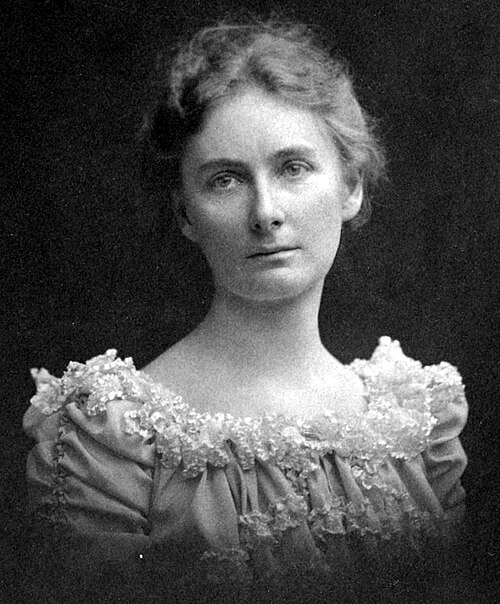
Inge Lehmann, a Danish seismologist, made one of the most important discoveries in geophysics: the existence of Earth’s solid inner core. In 1936, while analyzing seismic wave data from earthquakes, she noticed discrepancies in how P-waves traveled through Earth’s interior. Specifically, she identified P-waves appearing in the “shadow zone” where they should not exist. Rather than dismissing these anomalies, she proposed that Earth contained a solid inner core surrounded by a liquid outer core—an interpretation now known as the Lehmann Discontinuity.
At the time, the prevailing scientific belief held that the core was entirely molten. Lehmann’s interpretation fundamentally reshaped models of Earth’s internal structure. A legendary figure in the field who lived to be 104, her work remains central to modern seismology and planetary science, influencing everything from earthquake modeling to our understanding of geomagnetic processes.
Lesson for Modern Scientists
Lehmann’s legacy demonstrates that breakthroughs often emerge from small inconsistencies in data. Rather than forcing results to fit existing models, she trusted careful analysis. Her work underscores the importance of intellectual independence and data-driven reasoning, especially when findings challenge established assumptions.
Marie Tharp: The Power of Clear Data Visualization
Quick Facts
- Important Dates: Born July 30, 1920 and passed on August 23, 2006
- Specialization: Cartography and Oceanography
- Key Discovery: The Mid-Atlantic Ridge rift valley.
- Technical Innovation: Developed the first comprehensive physiographic (terrain and landform) maps of the entire ocean floor through data interpolation.
- Legacy: Provided the definitive visual evidence for the Theory of Plate Tectonics.
Her Contribution
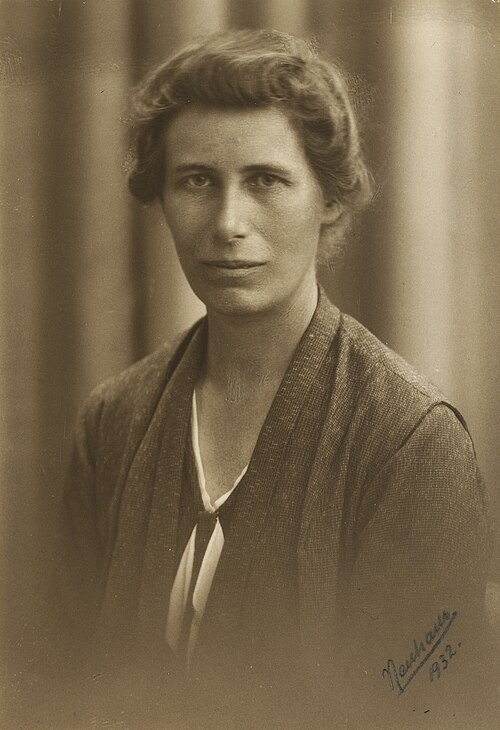
Marie Tharp revolutionized Earth science through mapping. Working with oceanographic data in the mid-20th century, she meticulously plotted sonar readings from the ocean floor. At a time when women were not permitted on research vessels, Tharp transformed raw bathymetric data into the first comprehensive maps of the ocean floor. She interpolated scattered 2D profiles to fill in the blanks, revealing a continuous rift valley along the Mid-Atlantic Ridge in 1952.
Her discovery was initially dismissed by her colleagues as girl talk, but the evidence eventually became undeniable, providing critical visual evidence supporting the theory of plate tectonics. Despite this, Tharp was not credited as an author on the seminal papers defining the discovery, and it was not until much later in her life that she received her due. In 1997—forty-five years after her initial find—she was finally honored by the Library of Congress, which displayed her work beside journal entries by Lewis and Clark.
Lesson for Modern Scientists
Tharp’s contributions highlight the transformative power of data visualization in geoscience. Her example shows that maps and models can reveal structure, relationships, and patterns hidden in raw data. With clear, rigorous visualization, geoscientists can bridge the gap between skepticism and acceptance, reinforcing that communication is inseparable from discovery.
Alice Wilson: Fieldwork, Persistence, and Regional Expertise
Quick Facts
- Important Dates: Born August 26, 1881 and passed on April 15, 1964
- Specialization: Stratigraphy and Paleontology
- Technical Focus: Paleozoic formations of the Ottawa-St. Lawrence Lowlands.
- Institutional First: First female geologist at the Geological Survey of Canada and first woman elected as a Fellow of the Royal Society of Canada.
- Legacy: Pioneered regional mapping in rugged Canadian terrain under significant institutional bias.
Her Contribution
Alice Wilson was Canada’s first female geologist and a pioneer in stratigraphy. Working with the Geological Survey of Canada (GSC), she conducted extensive field investigations across the Ottawa-St. Lawrence Lowlands. Despite institutional barriers—including the GSC’s refusal to approve her applications for leave to acquire a doctorate, an academic achievement she eventually received after winning a private scholarship from the Canadian Federation of University Women—Wilson persisted.
She completed demanding geological surveys, often in rugged terrain, and published influential reports that improved stratigraphic correlation across Canada. Eventually, she became the first woman elected as a Fellow of the Royal Society of Canada. Her career demonstrated that sustained field observation and regional expertise are indispensable in understanding Earth systems.
Lesson for Modern Scientists
Wilson’s legacy reinforces the importance of field-based knowledge. Even in a digital era dominated by modeling and remote sensing, firsthand observation remains foundational. Deep familiarity with a region strengthens interpretation, reduces overreliance on abstraction, and grounds analysis in observable reality.
Wangari Maathai: Science in Service of Society
Quick Facts
- Important Dates: Born April 1, 1940 and passed on September 25, 2011
- Specialization: Environmental Science and Veterinary Anatomy
- Technical Focus: Combating soil erosion and deforestation through reforestation.
- Global Milestone: First African woman to receive the Nobel Peace Prize (2004).
- Impact: Founded the Green Belt Movement, planting over 50 million trees to restore ecological and economic stability.
Her Contribution
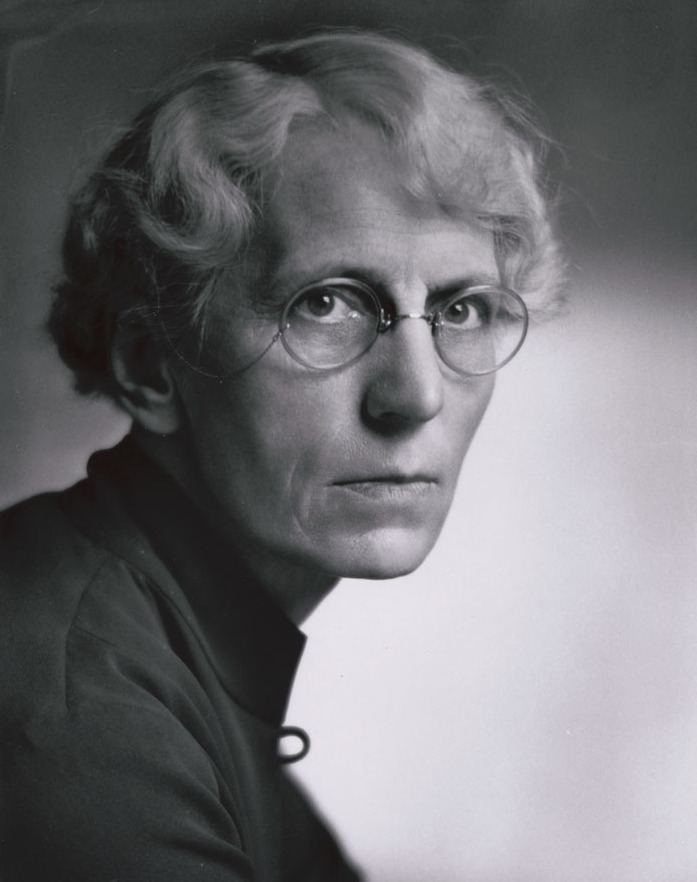
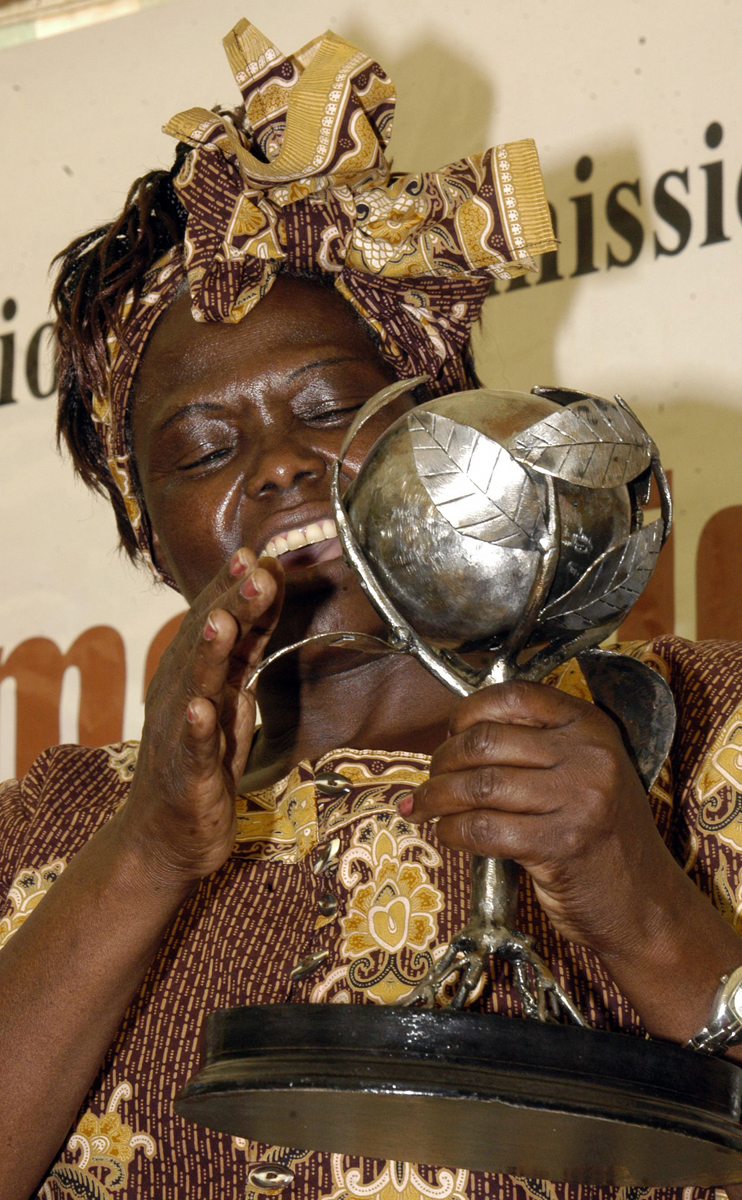
Wangari Maathai, a Kenyan environmental scientist and founder of the Green Belt Movement, expanded the impact of environmental science beyond research institutions. Trained as a veterinary anatomist, she was the first woman in East and Central Africa to earn a PhD. She eventually pivoted her scientific training to mobilize communities to plant millions of trees, combat deforestation, restore ecosystems, and promote sustainable land management.
Her work linked environmental science with policy, conservation, and grassroots action. By connecting ecological degradation to economic stability and social well-being, Maathai demonstrated how environmental data could inform national policy and community resilience strategies. Most notably, Maathai was the first African woman to receive the Nobel Peace Prize for her contributions to sustainable development and environmental stewardship.
Lesson for Modern Scientists
Maathai’s work reminds modern scientists that geoscience and environmental research do not exist in isolation. Data informs policy, infrastructure decisions, conservation planning, and long-term resilience. Scientific expertise carries societal responsibility. When applied thoughtfully, it can extend beyond analysis into measurable, community-level impact.
Practical Lessons for Today’s Geoscientists
When you step back and look at the impact of these historical women in geosciences, their careers point to clear, actionable principles that modern scientists can apply today. Some of those include the following:
- Master your technical foundation: Strong fundamentals in geology, geophysics, mapping, and analysis build credibility that outlasts any specific tool or trend.
- Follow the data even when it challenges assumptions: Breakthroughs often begin as small anomalies, and careful analysis should guide interpretation over convention.
- Use visualization strategically: Clear maps, models, and graphs present data, reveal patterns, and strengthen scientific communication.
- Invest in field knowledge and observation: Direct engagement with the landscape deepens interpretation and grounds digital analysis in real-world context.
- Connect your science to societal impact: Environmental and geoscience data influence policy, infrastructure, and community resilience, carrying responsibility beyond the lab or office.
These principles, modeled by historical women in geosciences, remain just as relevant today as they were when these pioneers first mapped, measured, and redefined our understanding of the Earth.
Building the Future on a Strong Foundation
The historical women in geosciences we’ve explored contributed to their respective fields and reshaped how we understand Earth itself. From redefining Earth’s inner structure to mapping the ocean floor, advancing stratigraphy, and connecting environmental science to public policy, their work laid foundations that modern geology, seismology, cartography, and environmental science continue to build upon.
However, their legacy is not only historical but also instructional. Their careers demonstrate that rigor matters, careful data analysis can overturn assumptions, visualization can shift paradigms, and scientific expertise carries societal responsibility. The breakthroughs of tomorrow will not happen by accident. They will come from scientists willing to think critically, work meticulously, and communicate their findings with clarity and purpose, just like the women we’ve examined.
If you want more insights on geoscience history, practical visualization strategies, and professional lessons you can apply in your own work, subscribe to the Golden Software blog. The next chapter of discovery is being written now—and you can discover how it’s unfolding.
2 Comments
Leave A Comment
Recent Articles
- Sep 23, 2026|Gabbie Rhodes|8 min
The best 3D data visualizations depend on the quality of your underlying grid. To achieve a great result, sometimes you need to use 3D grid filters.
- Sep 23, 2026|Gabbie Rhodes|11 min
When you're working with complex data, you need to communicate clearly. Graphs can help, especially when you follow design best practices.
- Sep 16, 2026|Gabbie Rhodes|7 min
The latest Surfer release delivers smarter 3D modeling, cleaner maps, and faster workflows. Unlock these benefits by discovering the top features.
- Sep 9, 2026|Gabbie Rhodes|4 min
Explore how Submara Survey bridged the gap between terrestrial elevation data and underwater bathymetry to guide costal development in Norway.

Thank you for the information about all these geoscience women. Their stories are indeed very interesting.
Of course! We loved putting this article together and learning about these amazing women in geoscience. I’m glad you enjoyed reading the content, Alecos!