Climate Zones, Luaus, and Creativity: Reflections From Katie’s Trip to Kauai, Hawaii
Hawaii is one of those rare places where every turn reveals something extraordinary: lush rainforests, dramatic volcanic landscapes, and beautiful beaches, making it a dream destination for anyone who loves the outdoors. Recently, our Customer Support Team Lead, Katie Yoder, had the chance to experience it all firsthand. She’s explored multiple Hawaiian islands over the years, but there’s always more to discover. For her most recent adventure, she decided to take a trip to Kauai.
Why a Trip to Kauai? A Closer Look at the Island Katie Explored
Known as the Garden Isle, Kauai is the oldest island in Hawaii. It’s home to dramatic sea cliffs, deeply carved valleys, and rainforests shaped by millions of years of erosion. Unlike more developed islands, much of Kauai remains rugged and wild; in fact, over 70% of the island is inaccessible by road, giving travelers a rare opportunity to experience landscapes that feel untouched and deeply tied to natural processes.
Kauai is also home to some of Hawaii’s most iconic geological wonders that reveal the island’s long erosional history. Add to that the island’s remarkable microclimates, and you have a destination where scenery can shift dramatically in a single drive.
With this combination of geology, climate, and preserved natural beauty, Kauai offers a quieter, more nature-focused experience than many of the other islands. And now that Katie is back from her time exploring it, she’s giving us an inside look at what she saw, learned, and loved during her trip.
This wasn’t your first time visiting Hawaii. Why do you go so often, and what inspired you to take a trip to Kauai?
I love Hawaii. I have a wish that I could spend a month there every winter. I love the ocean, the greenery, and the culture; the vibe is very chill. It’s a nice break from the dry climate and lack of water in Colorado.
The first time I went to Hawaii was in the early 2000s with my dad. We went to Oahu, and a few years later, the Big Island. I went back to Oahu with my mom about five years ago. Then, after a very busy 2024 with almost no vacation time, I decided to start taking two vacations a year. Last year, I did a road trip through Utah, Arizona, and New Mexico, followed by this trip to Kauai with my mom. This was our first time on Kauai.
What stood out to you in Kauai that was particularly interesting?
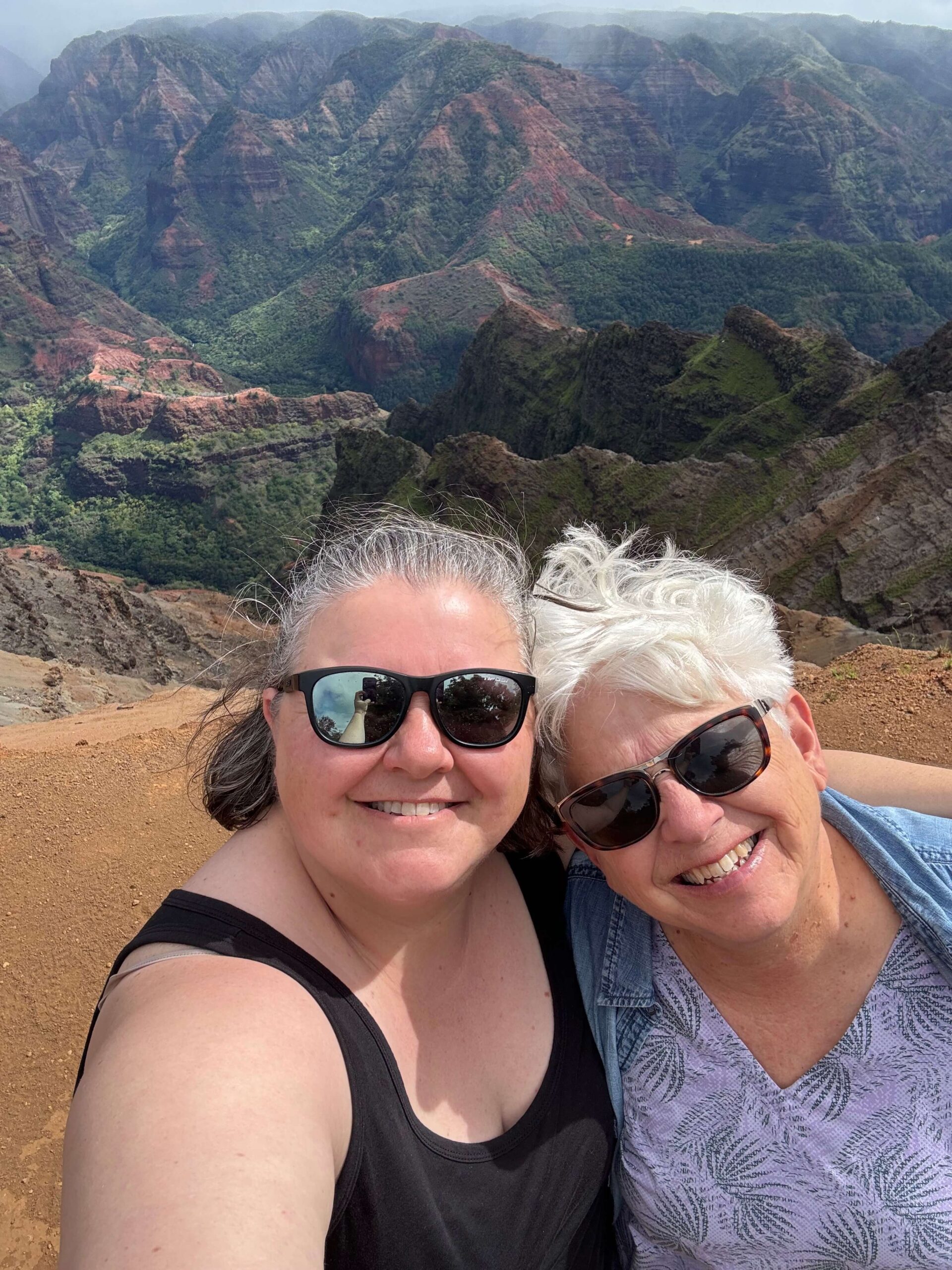
The most interesting thing was driving around the island. Kauai is not large, yet it contains seven microclimates. You go from the tropics to the desert to the rainforest very quickly. It’s obvious when you change zones because the plant life shifts drastically. For example, the mountain peak gets over 600 inches of rain a year, but only 45 minutes away on the west side, there is a rain shadow that gets less than 17 inches annually. Kauai also has what they call the “Grand Canyon of the Pacific,” which is the Waimea Canyon. It’s a massive canyon that forces the road to go all the way around the island because you can’t drive through it.
How did being surrounded by such dynamic natural processes shape your experience?
We were definitely at the mercy of Mother Nature. We stayed in a condo community, but our building was just a little bit off the coast. Even just walking out to the water, the wind was insane. There were very few calm days, and you didn’t really want to stay exposed to that wind for very long.
It was also hard to know what the weather would be like in one area of the island versus another. We went to this beautiful beach and got lucky because the rain stopped right as we arrived. But when we went to explore the town, the rain rolled in again. We had to head to a completely different part of the island to find something else to do. You just had to be flexible in your plans.
The weather apps only predict “rain” for the day; they can’t predict those one- or two-hour gaps of sunshine. And the news channels weren’t helpful because they give the weather for the whole of Hawaii across multiple islands, which doesn’t help when you’re dealing with specific climate zones on one island.
They actually have this “Coconut Weather Station” that was really funny, but it’s a silly joke. If the coconut is wet, it’s raining; if the coconut is moving, it’s windy. It’s a way of saying you truly cannot predict the weather there. If you want to know what the weather is, you just have to look outside.
What was the most surprising thing you learned about the natural environment there?
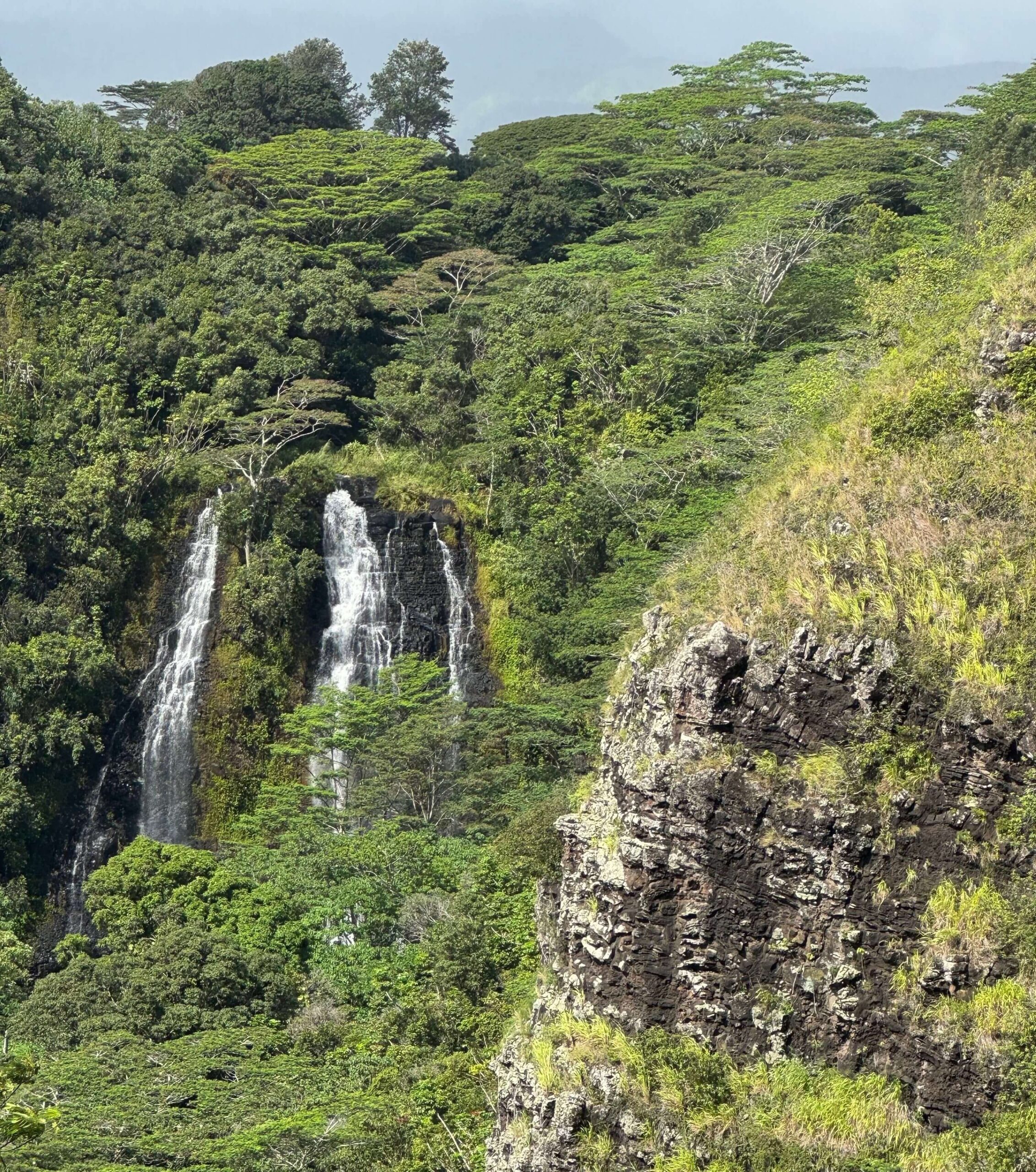
A huge percentage of the plant life on the island is actually non-native and invasive. Because the climate is so hospitable—with rich soil and plenty of water—invasive species have drastically changed the landscape from what the Native Hawaiians would have seen centuries ago.
Did You Know?
Kauai is home to the highest concentration of endemic plant species in Hawaii, thanks in part to being the oldest island in the chain and having millennia for unique species to evolve. But this remarkable biodiversity is increasingly threatened. Across the Hawaiian Islands, more than 1,360 native plant species exist, yet over 130 have already gone extinct since the 1840s due to invasive species, habitat changes, and extreme weather. Kauai recently became the first island to have all its endemic vascular plant species assessed for the International Union for Conservation of Nature’s Red List of Threatened Species, an important step toward understanding the risks these species face and guiding future conservation efforts.
Did you learn anything about the history of the islands that left an impression?
We went to a luau where they explained the history of hula and the various cultures it came from. I learned that there was a long history of war among island nations—Tahitians, Polynesians, and others—fighting over the different islands. The culture we know today as “Native Hawaiian” is a combination of all those older island cultures. That context made the hula even more interesting. I loved it so much. It was more than just a performance.
We also went to a hula demonstration at a big hotel that was put on by the woman who taught our lei-making class. The demonstration was incredible because it was up close with just two dancers.
Were there any environmental conservation efforts that stood out to you?
We didn’t get out on the water this time, but I know there are major reef protection efforts. You can actually see the importance of the reefs just by watching the water; the waves break far out on the reefs or rocks rather than hitting the shore with full energy. Without those reefs, the shorelines are under much more threat from erosion and intense waves.
Did You Know?
Hawaii is home to some of the most biologically rich coral reefs in the United States, and protecting them has become a major statewide priority. The reefs face escalating threats from land-based pollution, macro algae overgrowth, and rising sea surface temperatures. In response, resilience efforts play a critical role in the Hawaii Coral Reef Strategy 2030, which focuses on protecting, conserving, restoring, and monitoring coral reef ecosystems.
What was the most memorable moment of your trip to Kauai?
The last day. We had “perfect” Hawaii weather. It was a completely clear day. We got into the ocean, went to a nice restaurant right on the water, and watched the sunset. It was a lovely end to the trip.
How did this trip refresh you personally? Is there anything you brought back—beyond souvenirs—in terms of feeling good or a new perspective?
It was definitely a much-needed mental break. I successfully managed not to check my email or Slack the entire time, which was a big win for me. But beyond just the break from work, I came back with a renewed desire to pursue my creative interests. I do a bit of everything—sketching, painting, knitting, pottery, glasswork, and quilting. Being in Kauai really sparked that again.
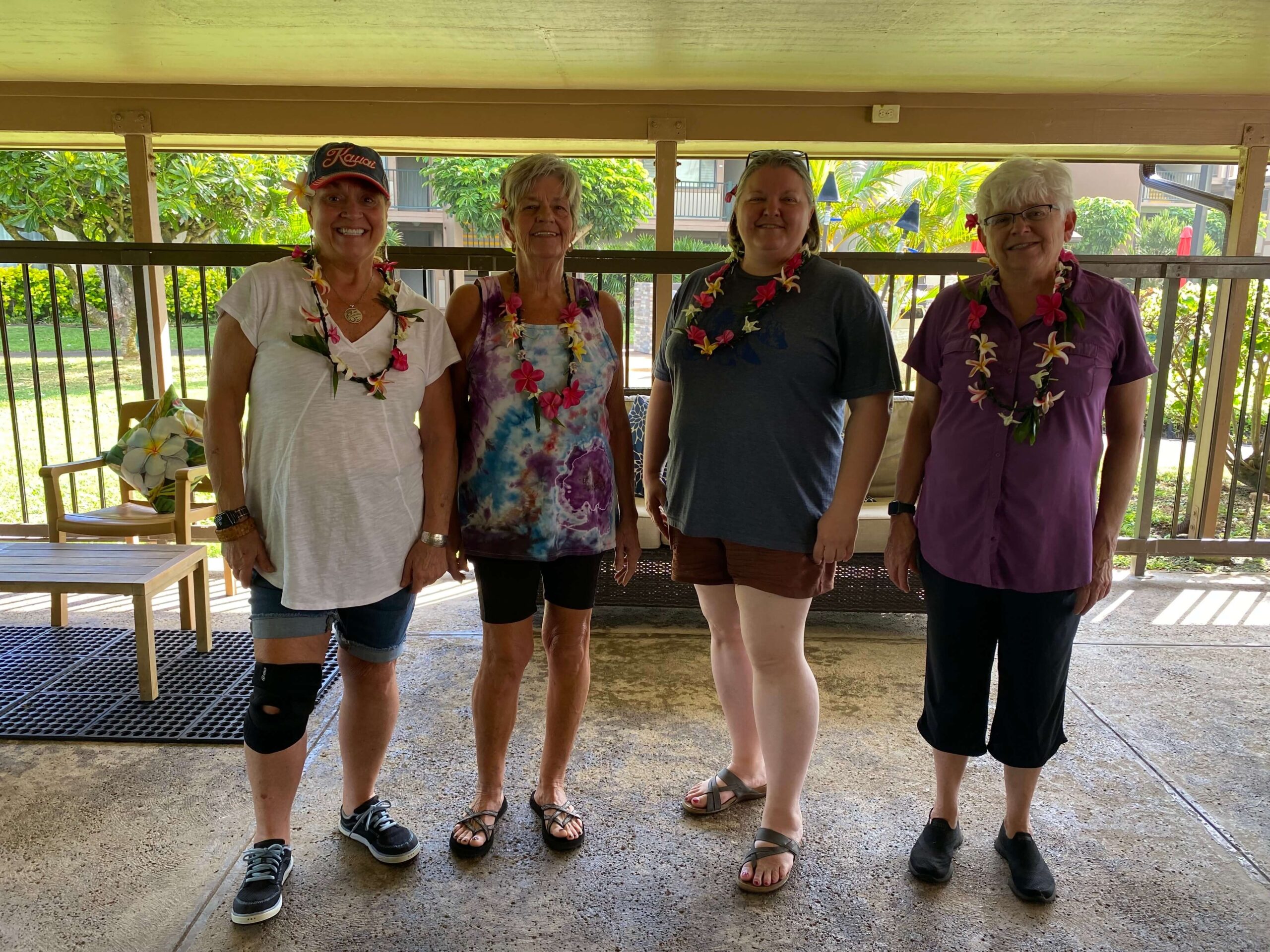
The island’s beauty was a big part of inspiring my creativity. I found myself taking pictures specifically thinking, “Oh, this would make a beautiful painting.” We also did a few hands-on creative things while we were there. We took a lei-making class, where we learned to weave real leis using orchids and ti leaves. It was so cool that I actually brought home some ti leaves so I can teach my nieces how to make them this summer.
The other reason I came back inspired was because my favorite souvenirs are pieces of artwork. I tend to visit a lot of art studios whenever I travel. The artist I was most impressed by on this trip to Kauai was Troy Carney. He makes these 3D art pieces by cutting out intricate designs and layering them in epoxy. He has a video of the process on his website.
If you could create one visual in Surfer or Grapher inspired by your trip to Kauai, what would it be?
It would be neat to visualize the historical sailing routes between the islands, showing where the different villages were set up and coloring the routes by island culture, like Polynesian versus Tahitian, for example.
A Journey Fueled by Nature, History, and Creativity
Katie’s trip to Kauai is a reminder of why places like Hawaii leave such a lasting impact—not just because of their beauty, but because of the way they spark creativity and appreciation for the natural world. From dramatic canyons to the rapid shifts between climate zones, Kauai gave Katie a deeper look at the forces that shape our planet and the cultures that have learned to thrive alongside them.
Her reflections also highlight something we value deeply at Golden Software: the power of exploration. Whether it’s venturing into a rainforest or experimenting with new artistic techniques, these experiences enrich the way we see and interact with the world both personally and professionally.
If you enjoyed this glimpse into Katie’s journey and want more stories, insights, and technical tips from the Golden Software team, be sure to subscribe to our blog. You’ll get our latest posts delivered straight to your inbox so you never miss an update.
Recent Articles
- Sep 16, 2026|Gabbie Rhodes|7 min
The latest Surfer release delivers smarter 3D modeling, cleaner maps, and faster workflows. Unlock these benefits by discovering the top features.
- Sep 9, 2026|Gabbie Rhodes|4 min
Explore how Submara Survey bridged the gap between terrestrial elevation data and underwater bathymetry to guide costal development in Norway.
- Sep 9, 2026|Gabbie Rhodes|10 min
In a recent webinar, John Vanderlaan, founder and owner of Prism GeoImaging, Inc., explored how to visualize geophysical data effectively.
- Sep 2, 2026|Gabbie Rhodes|8 min
Effective wildfire mitigation requires more than tracking fire behavior alone. You have to monitor multiple variables, and visualizations can help.