A Sneak Peek Into Our 2026 All Hands Meeting

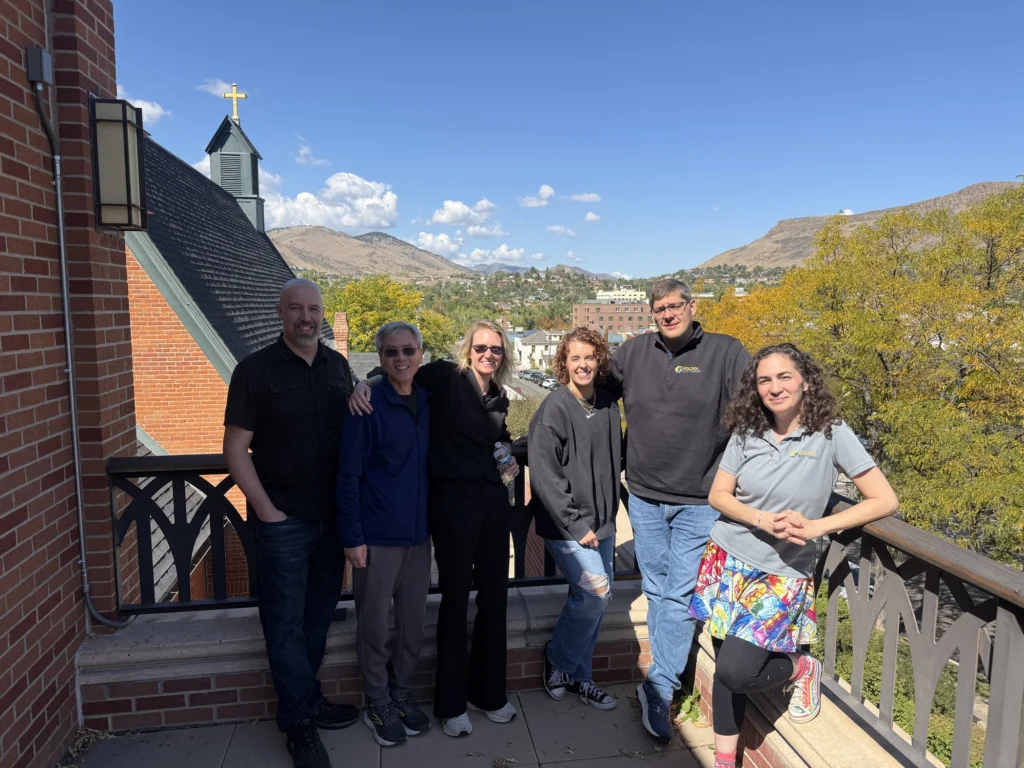
Remote work hasn’t stopped our team from collaborating well, but relying on Slack messages and video calls can only take us so far. Sometimes, there’s no substitute for getting everyone in the same place, especially when we want to reconnect, reflect on what we’ve accomplished, and think about where we’re headed next.
That’s exactly why we had our 2026 All Hands Meeting.
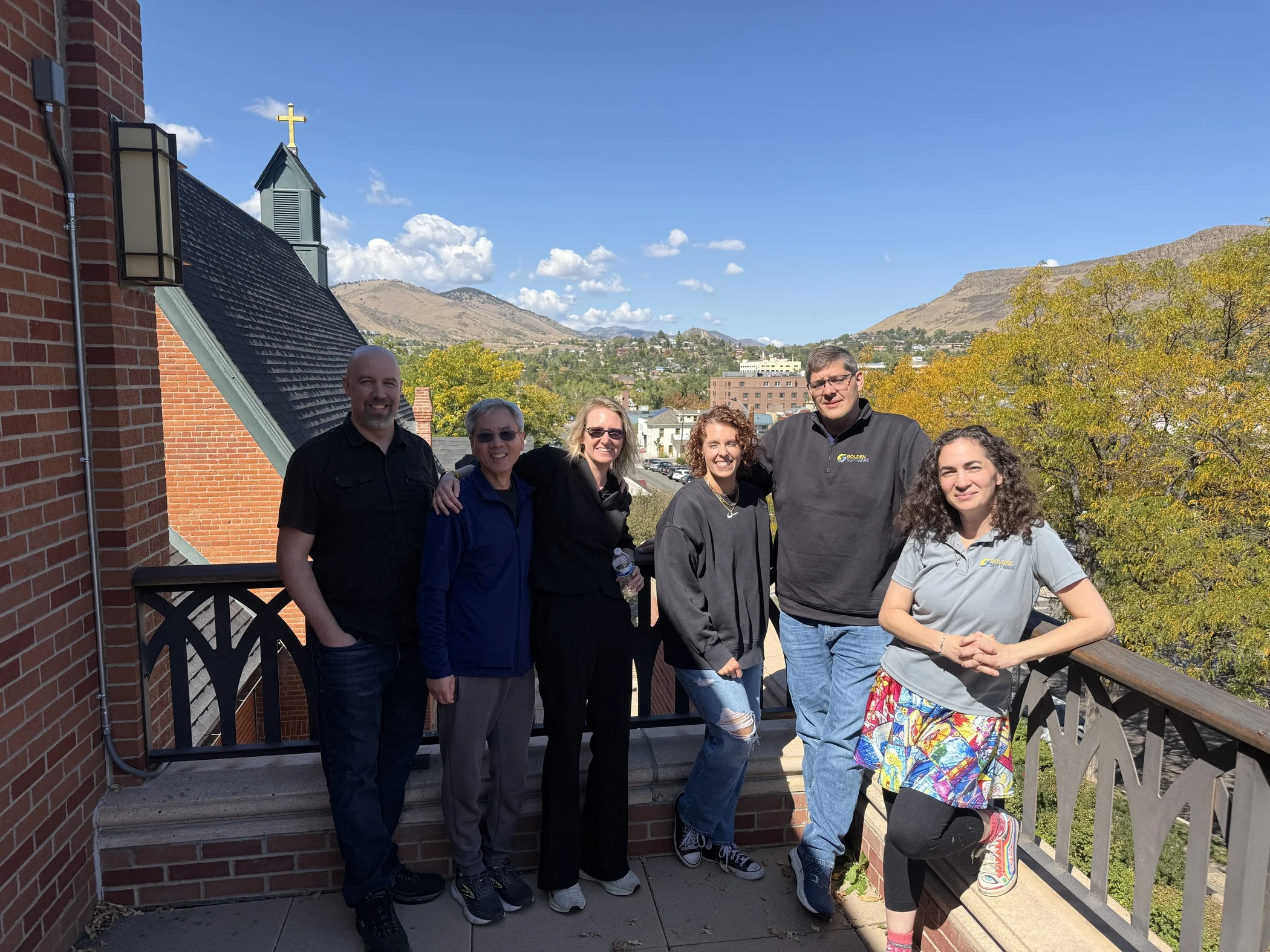
In October, our entire team gathered in Golden, Colorado, to step away from our usual routines for a few days of collaborative workshops, customer conversations, strategic discussions, team activities, and, of course, plenty of fun. What exactly did that look like? Let’s take you behind the scenes of our All Hands Meeting to share some of the highlights and why making time to come together matters not only to us but to the customers we serve.
Why We Make Time to Meet Face-to-Face
For a fully remote team like ours, meeting in one place every year is critical, which is why we make it a priority. Our annual All Hands Meeting gives us three days of dedicated time to invest in our relationships as a team and align on how to keep serving our customers well. The value of making time for both is twofold.
On the team side, spending time together face-to-face helps us get to know others that we only see through a screen. Those connections carry over into the rest of the year, helping us communicate, collaborate, and work together more effectively from wherever we’re located.
On the customer side, our All Hands Meeting provides room for us to look at our work through users’ perspective. We can reflect on what we’ve learned, explore opportunities ahead, and discuss how our individual teams and the company as a whole can continue improving the customer experience.
Ultimately, the two are closely connected. The stronger we work together as a team and the more we collectively focus on our customers, the better positioned we are to help the people who rely on our software tackle complex projects.
“This year’s theme, Building Bridges, was all about closing the gaps that naturally form when we’re focused on our own teams and projects,” said Chief of Staff Laura Escalante, who organizes our annual All Hands Meetings. “We wanted everyone to better understand how other teams work, how we can support each other more, and most importantly, how our work connects to our customers.”
A Look at What We Did During Our 2026 All Hands Meeting
Now, it’s time for the fun part: how did we spend our time together? Rather than giving you a play-by-play of the entire agenda, here are highlights of the main events and what each one helped us accomplish.
1. Kicking things off with friendly competition and creativity
We started our All Hands Meeting with department activities designed to get teammates connecting, creating, and competing.
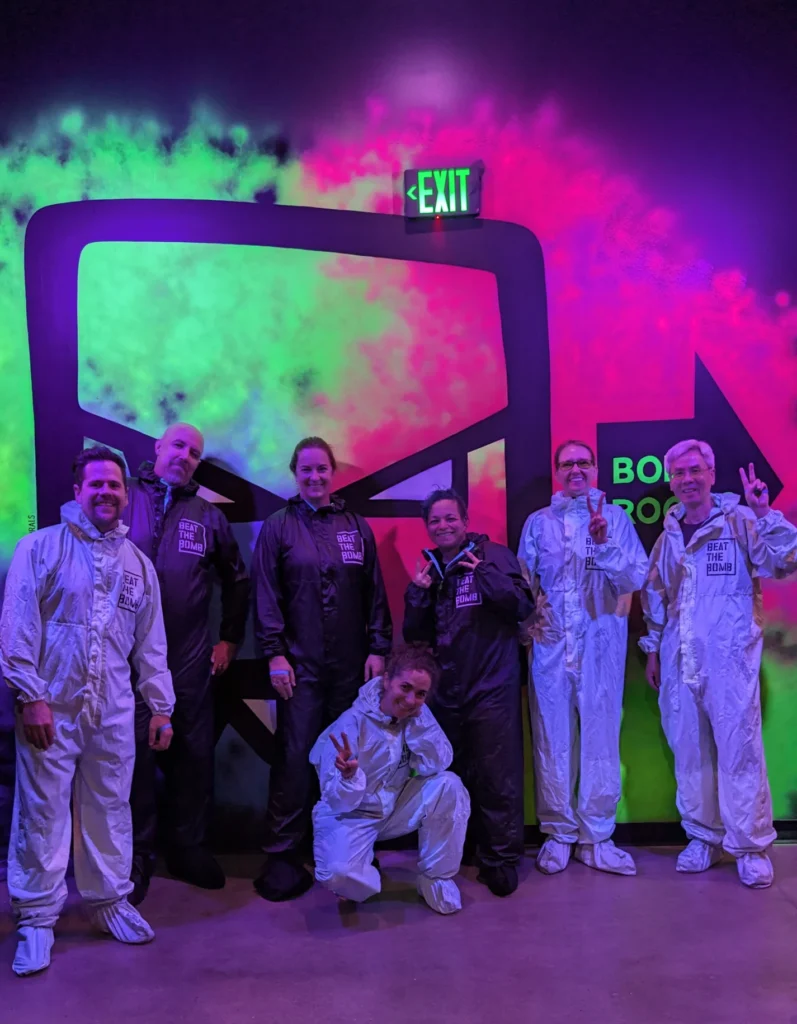
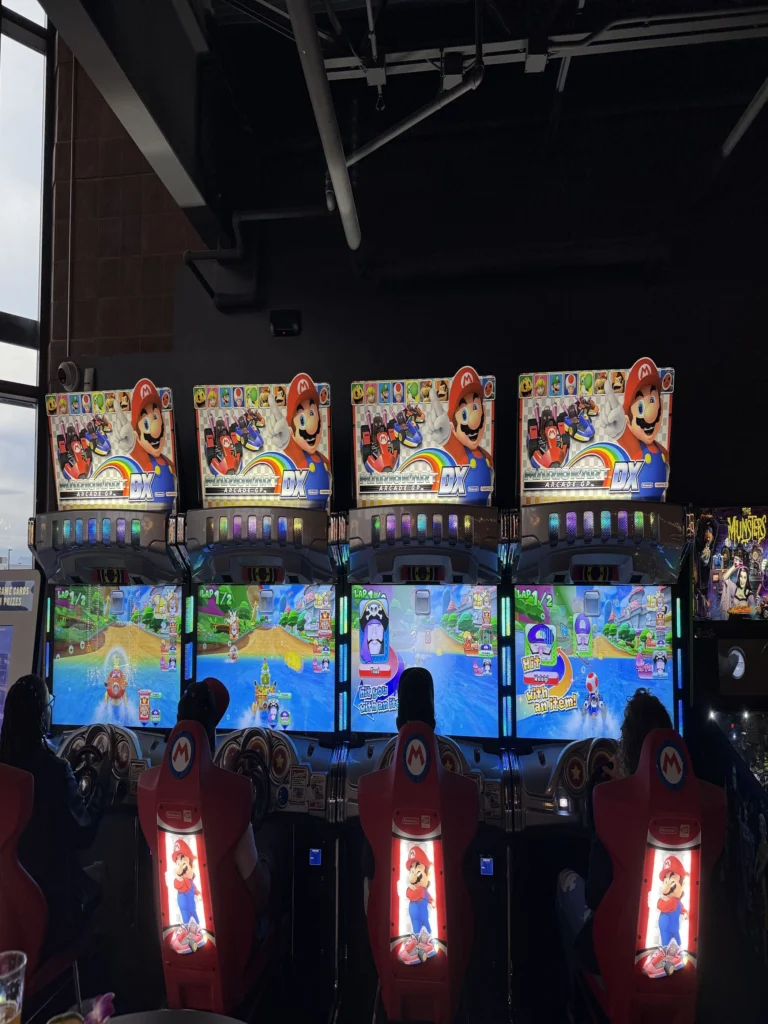
Each department had something different planned. Our Customer Success team tapped into its creative side with a fused-glass project, while Operations gathered at the Golden Game Guild. Product put its teamwork to the test at Beat the Bomb, and Sales and Marketing headed to Pindustry for some friendly competition around arcade games and bowling.
The activities may have looked different, but they gave each team time to enjoy being together. When most of our interactions happen virtually, sharing experiences outside of regular meetings helps build the relationships that make collaboration easier when we all return home.
2. Reflecting on our progress and planning what’s next
With some team bonding under our belts, our focus the next day shifted toward where we’ve been, what we’ve learned, and where we’re going next.
We began by reconnecting around Golden Software’s purpose and priorities before our CEO, leadership team, and project leads guided us through the State of the Company. Together, we reflected on accomplishments and lessons learned, explored opportunities to improve, and discussed the priorities that will shape the work ahead.
Conversations like these help us zoom out from our individual to-do lists to see how our work fits together. It also ensures we coordinate our efforts around shared objectives and, ultimately, deliver more meaningful value to our customers.
3. Learning directly from our customers
Of course, if we’re going to spend time discussing how to better serve our customers, it’s best to get insights from the customers themselves.
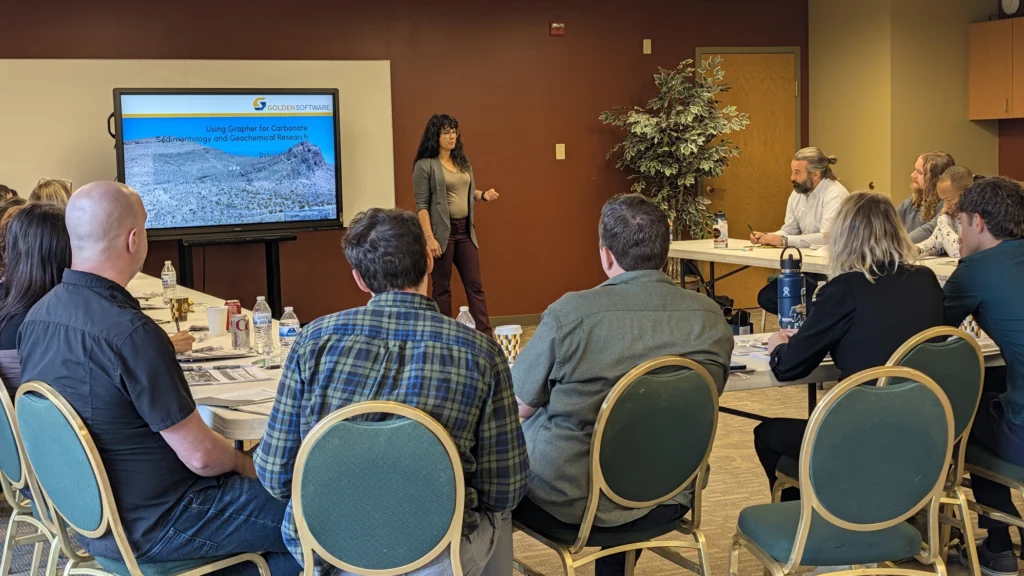
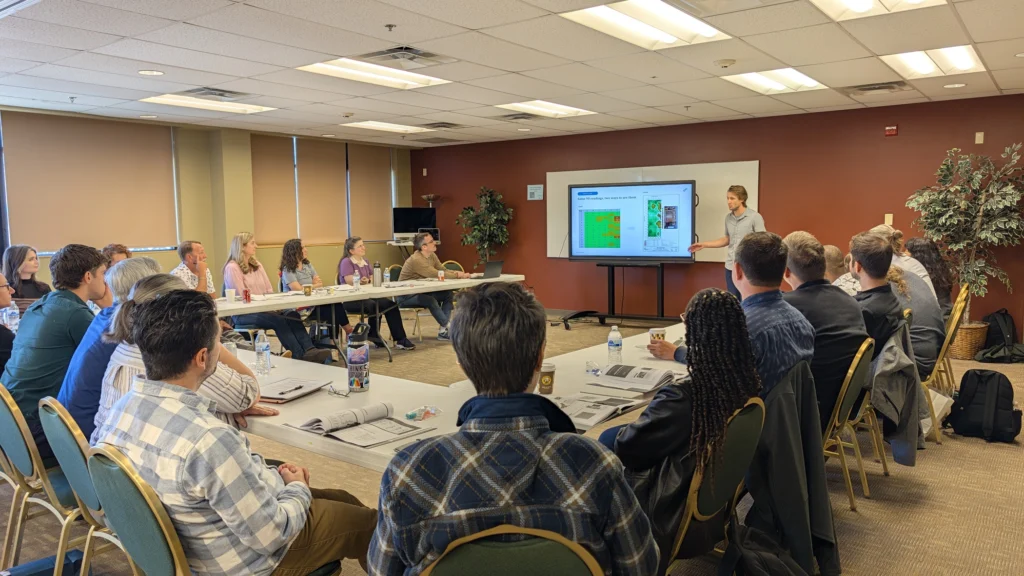
During our All Hands Meeting, we welcomed two Surfer and Grapher users whose work takes them into very different corners of the geosciences: Zach Sharon, Senior Corrosion Engineer at Infinity Corrosion Group, and Deborah “Debbie” Morales, a geologist, educator, and Ph.D. candidate in the University of Nevada, Las Vegas Department of Geoscience.
Zach has spent more than a decade working in cathodic protection, with projects involving water utilities, pipelines, and transit systems across the Mountain West. Debbie’s research uses geochemical datasets, including stable isotope, rare earth element, and trace element analyses to investigate changes in ocean oxygenation across Earth’s history.
Zach and Debbie led their own customer workflow sessions, and their different backgrounds helped our team learn how users rely on our products in real-world projects, the challenges and goals that shape their workflows, and the people behind the data we often talk about in meetings. Zach and Debbie also left time for a Q&A and joined our team for lunch, giving us the opportunity to dig deeper and ask questions directly.
These in-depth conversations matter to everyone at Golden Software. What we learn from customers informs how we develop products, provide support, and communicate with the people who use our software. Customer-centricity isn’t limited to one department, and hearing directly from our Surfer and Grapher users empowers all of us to better understand the work we’re here to support.
Pro Tip
Zach and Debbie aren’t the only customers who could find themselves at a future All Hands Meeting. Customers who regularly connect with our team can also have the opportunity to join us and discuss their projects and workflows.
One easy way to start connecting with us now is to sign up for a discovery call with our product team. They’d love to hear about your work in Surfer or Grapher—and you might just find yourself joining us in Golden someday!
4. Strengthening communication and collaboration
After the customer workflow sessions, an improv expert led us through an interactive team communication workshop focused on strengthening connections and working together more effectively. With many of us on the team being introverts, we were initially nervous about the workshop—but as we went along, we shared plenty of laughs and made great memories.
Our Customer Success Team Lead, Katie Yoder, also put our communication skills to the test with a building-bridges team challenge. Everyone split into their department teams with one deceptively simple assignment: use a set of small LEGOs to build the longest bridge possible.
Naturally, the competition was on. Each team worked together to make its bridge as long as possible, but eventually, the individual teams joined forces and connected their bridges to create one that was much longer. It was a fun way to put communication and teamwork into practice. It was also a fitting reminder that sometimes the best results come when everyone stops building separately and starts connecting what they’ve created.
5. Sharing ideas and learning together
During our All Hands Meeting, we took time to look beyond our current work and ask: What else can we explore together? Our Product Team Lead, Patricia Pichardo, led a session for us to generate ideas, identify the ones we want to pursue, and discover how much overlap exists among different teams’ interests. It gave everyone across departments a voice in brainstorming goals while revealing common ground in what we want to accomplish.
We also had a fun opportunity to expand our technical knowledge. Dr. John Sakulich, Professor and Environmental Science Program Director at Regis University, joined us for a skill share focused on map-making principles. We explored what goes into creating effective maps, examined examples of what works—and what doesn’t—and discussed common mistakes that can weaken a visualization. For a company that helps scientists and engineers visualize and communicate technical data, strengthening our own understanding of effective map-making was incredibly helpful.
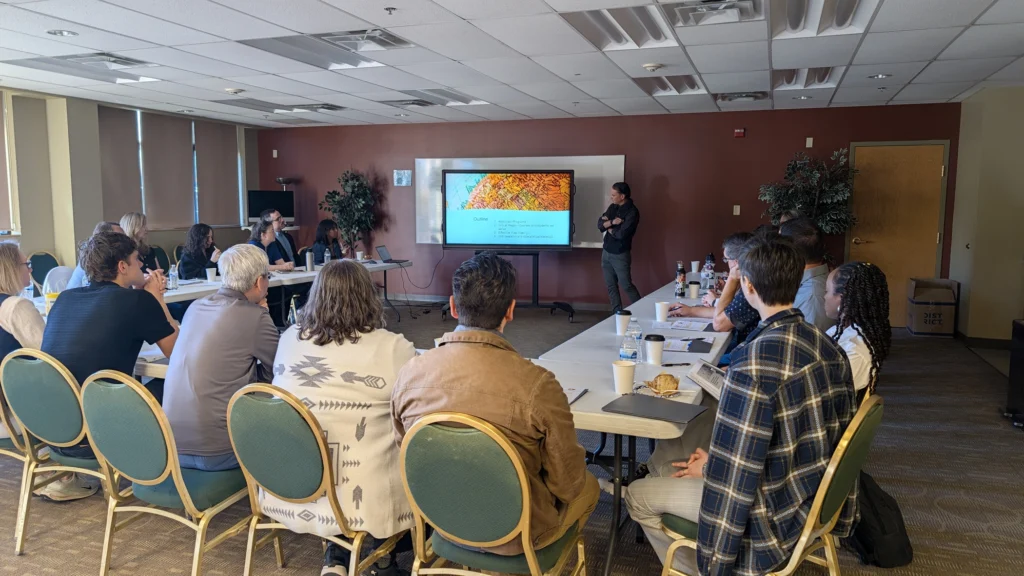
6. Making time for laughter, meals, and memories
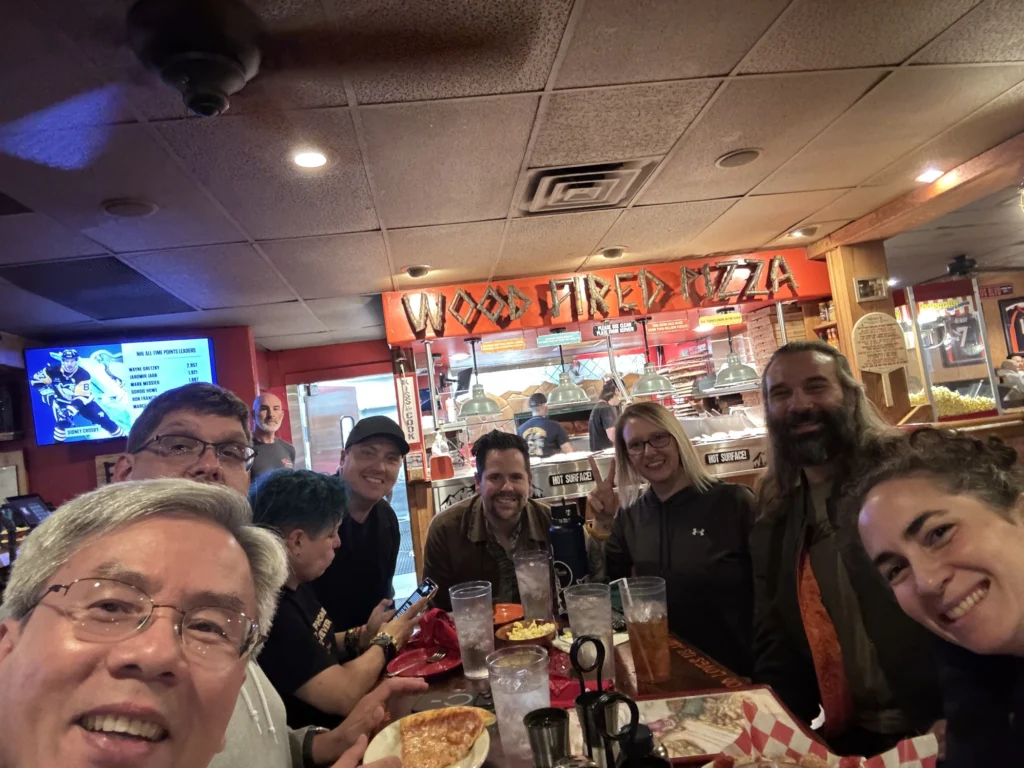
Of course, some of the best moments at our All Hands Meeting were more informal. Between sessions, there were breakfasts and lunches, conversations that continued after workshops ended, and plenty of opportunities to catch up. We also gathered for a private catered team dinner to enjoy time together outside the day’s activities. These less-structured moments gave us a chance to deepen our relationships, relax, and catch up about work and life in general.
Taking the Best of All Hands Back Home
After a few days together, our 2026 All Hands Meeting came to an end. But the real value of those few days is what happens after everyone heads home. We recently returned to our day-to-day work but with stronger relationships and fresh insight into how to support the people who rely on Surfer and Grapher. We’re excited to see the benefits that come, but overall, we’re expecting that we’ll work collaboratively to deliver an even better experience to our customers in the year ahead.
What helps your team stay connected and collaborate effectively, especially when you don’t work in the same place? Leave a comment below and share what works for you.
Recent Articles
- Oct 28, 2026|Gabbie Rhodes|8 min
For our 2026 All Hands Meeting, our team gathered in Colorado for a few days of workshops, customer conversations, and fun activities.
- Oct 21, 2026|Gabbie Rhodes|7 min
Want your subsurface data to tell a clear story to stakeholders? Learn how to visualize it in 2D and 3D so your data clearly shares key insights.
- Oct 21, 2026|Gabbie Rhodes|10 min
With climate change data, you need to visualize where temperature, precipitation, and other variables occur and change over time. Learn how.
- Oct 14, 2026|Gabbie Rhodes|7 min
Mineral exploration requires you to analyze multiple variables. To do that successfully, you need to rely on both maps and graphs.