How to Enhance Team Collaboration in Geoscience to Ensure Project Success
Geoscience projects rarely succeed because of one person alone. Whether you’re mapping groundwater contamination, modeling subsurface geology, monitoring environmental conditions, or evaluating engineering sites, positive outcomes depend on people with different areas of expertise working toward successful project completion.
But let’s be honest: successful project completion requires effective collaboration—and that demands far more than sharing files or attending meetings.
Your team must ensure information flows easily, expertise is shared openly, and every contributor has the context needed to contribute their best work. When those efforts fall short, projects easily stall. Fortunately, there are practical strategies that can help your team collaborate more effectively, so projects move forward with greater confidence.
Why Effective Team Collaboration Matters
First, let’s set the foundation: why does team collaboration matter?
Every geoscience project benefits from technical expertise, and the strongest outcomes rarely derive from one discipline working in isolation. They come from people with different perspectives working together to solve the same problem.
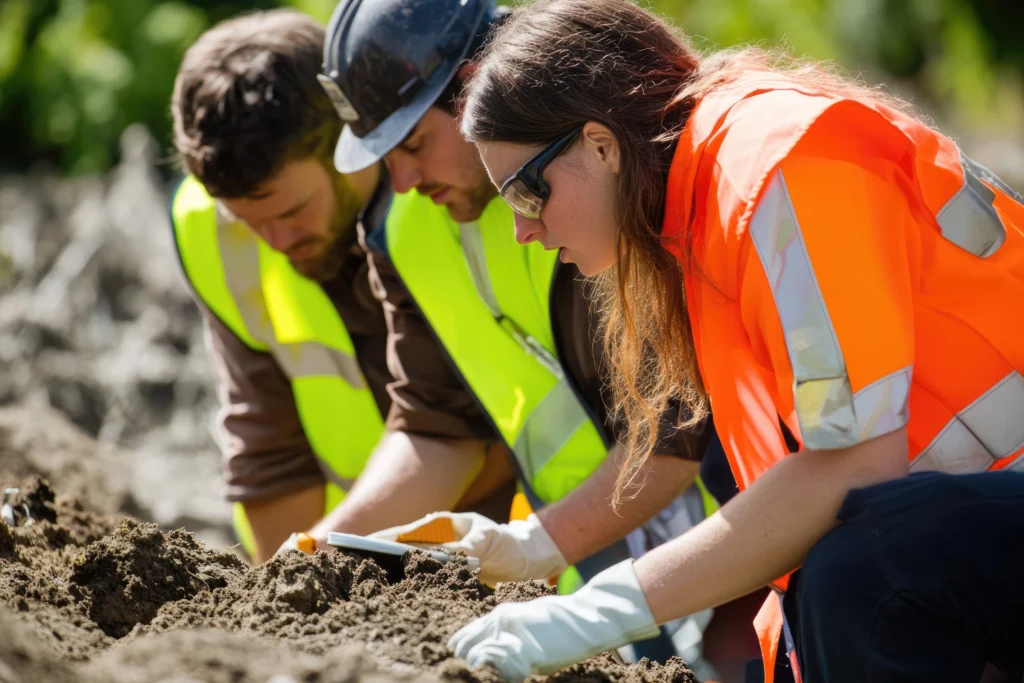
Many projects involve collaboration between geologists, engineers, GIS specialists, field teams, and project managers. Each group contributes unique knowledge that helps shape the final outcome. And when their perspectives are shared effectively, teams develop stronger interpretations, identify potential blind spots early, and make better-informed decisions throughout the project, enhancing overall success.
Unfortunately, the opposite is also true.
When collaboration breaks down, the consequences often extend well beyond simple communication challenges. Teams may unknowingly duplicate work, operate from conflicting assumptions, overlook important information, or produce inconsistent deliverables that require additional revisions.
In many cases, these collaboration challenges introduce more project risk than the technical work itself. Even highly skilled teams can struggle to produce their best work when knowledge isn’t shared clearly or important context gets lost along the way. That’s why effective collaboration is about creating an environment where team members can easily access information, openly share their expertise, and quickly receive the context needed to ensure successful project completion.
Practical Ways to Enhance Team Collaboration
So, how can you create an environment where team collaboration thrives? The most effective teams implement best practices that make it easy to work well with team members. Here are several practical strategies you can introduce to your team today.
1. Use in-product comments to share knowledge and context
Important project knowledge often ends up scattered across emails, meetings, chat messages, and personal notes. As projects progress, it becomes increasingly difficult to remember why certain decisions were made, how a visualization was created, or what assumptions guided the analysis.
Instead of allowing that information to live in disconnected conversations, document it directly within your project files whenever possible. Useful comments may include information such as:
- Workflow decisions
- Processing steps
- Assumptions
- Customizations
- Interpretation notes
- Revision requests
Capturing this context alongside the work itself preserves valuable project knowledge, improves transparency, reduces repetitive questions, and helps future reviewers understand the reasoning behind the final deliverable much more quickly.
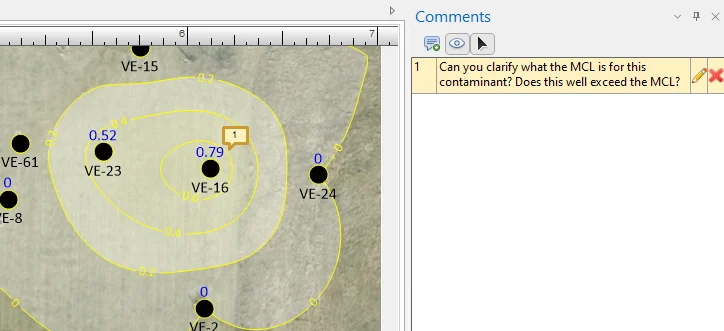
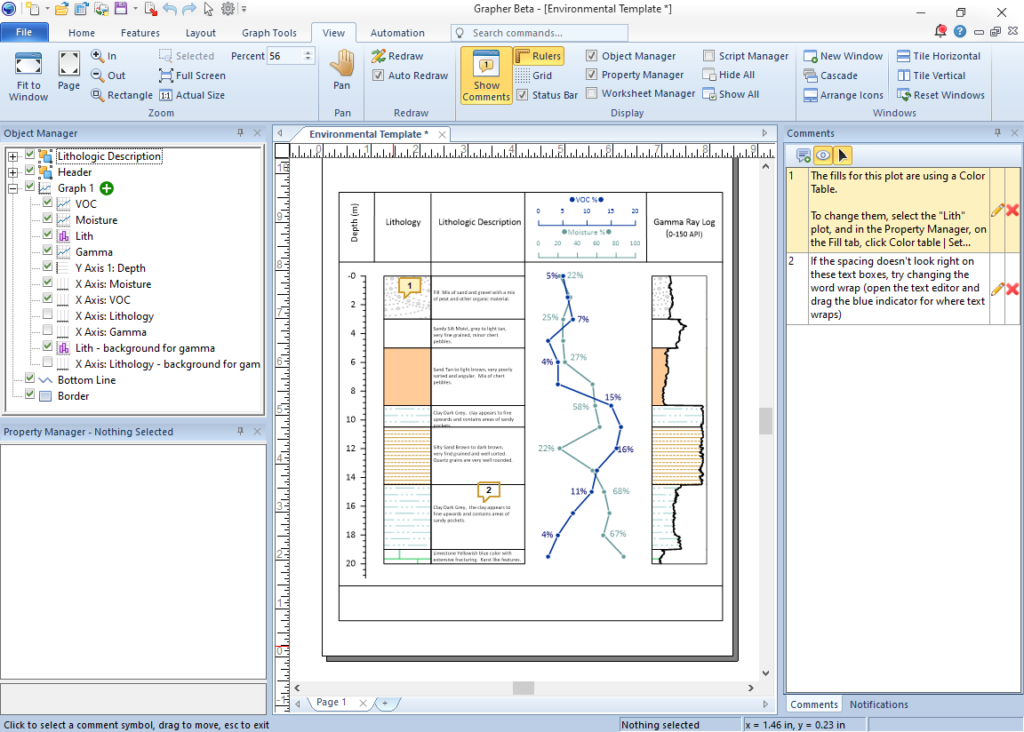
For example, with tools like Surfer and Grapher, users can leave in-product comments directly on their visualizations to explain why a particular gridding method, contour interval, graph scale, customization, or formatting decision was selected (see images below). Rather than wondering how a map or graph was created months later, teammates can immediately understand the reasoning behind it.
2. Establish clear communication and review workflows
Even highly collaborative teams can become inefficient when responsibilities and review processes aren’t clearly defined. But team members should never have to guess who owns a task, who reviews deliverables, or when feedback is expected.
To create consistency, establish clear expectations around the following:
- Project ownership
- Technical reviewers
- Final approvers
- Stakeholder communication responsibilities
Communication should also be specific, actionable, documented, and easy to follow so everyone understands what needs to happen next.
In practice, this could look like having a predefined review process for a groundwater mapping project where technical review occurs first, followed by project management review, before the maps and models are released to stakeholders. With this clear review process, there’s less confusion, clearer expectations, and fewer delays.
3. Create shared visibility around projects and decisions
One of the fastest ways for collaboration to break down is when important project information is only available to a few people. Instead of allowing key insight to remain among select team members, create shared locations where everyone can easily access information.
Some of the most important details that should be easy to access include the following:
- Project updates
- Assumptions
- Key decisions
- Action items
- Revisions
- Final outputs
This information can be stored within project files, shared folders, meeting notes, or other centralized resources that team members can access. A consulting team, for instance, may maintain a shared project workspace where the latest maps, graphs, reports, comments, revisions, and project updates are always available to everyone involved.
4. Use technology to reduce collaboration friction
Not every part of collaboration requires technical expertise. Many administrative tasks consume valuable time that could be better spent analyzing data, enhancing visuals, or reviewing deliverables. To help team members focus more on critical tasks, incorporating AI into workflows is helpful.
AI can streamline routine activities such as:
- Meeting summaries
- Action-item extraction
- Organizing project notes
- Summarizing discussions
- Drafting follow-up communications
- Formatting data for maps, graphs, and models
Here’s an example to put this into perspective: after a project meeting, AI tools can generate a summary of key decisions, action items, and next steps, giving every team member a clear record of what was discussed.
5. Create a culture where questions are encouraged
Strong collaboration depends on open communication, and that begins with making questions a normal part of the project workflow.
Throughout the project, encourage team members to do the following:
- Ask questions
- Challenge assumptions
- Seek clarification
- Offer alternative perspectives
Creating opportunities for these conversations helps identify issues earlier, reduces unnecessary assumptions, and leads to stronger technical discussions.
For example, a weekly project meeting might reserve time specifically for team members to raise questions or concerns before deliverables are finalized, giving everyone an opportunity to resolve uncertainties before they become larger problems. When people feel comfortable asking questions, collaboration becomes more effective, productive, and ultimately more successful.
Better Collaboration Leads to Better Projects
Successful geoscience projects aren’t built solely on technical expertise; they’re built on effective team collaboration. When teams have systems that make it easy to find and provide information, they spend less time overcoming misunderstandings and more time working toward successful project outcomes.
The good news is that better collaboration doesn’t require a complete overhaul of your workflow. Small improvements—whether documenting decisions, encouraging questions, establishing clearer review processes, or using technology to reduce administrative work—can have a lasting impact on project success.
Now we’d love to hear from you: What’s one strategy your team can use to collaborate more effectively on geoscience projects? Leave a comment below and share what’s worked well for your team.
Recent Articles
- Sep 2, 2026|Gabbie Rhodes|8 min
Effective wildfire mitigation requires more than tracking fire behavior alone. You have to monitor multiple variables, and visualizations can help.
- Sep 2, 2026|Gabbie Rhodes|6 min
Promising mineral deposits are rarely identified by a single variable. That's why multivariate data visualization is essential to mineral exploration.
- Aug 26, 2026|Gabbie Rhodes|8 min
Whether you produce visuals every day or only occasionally, small workflow improvements when mapping data can save you significant time.
- Aug 26, 2026|Gabbie Rhodes|8 min
Explore how to create multivariate visualizations for earthquake data so you can easily interpret and share the complete picture with stakeholders.